
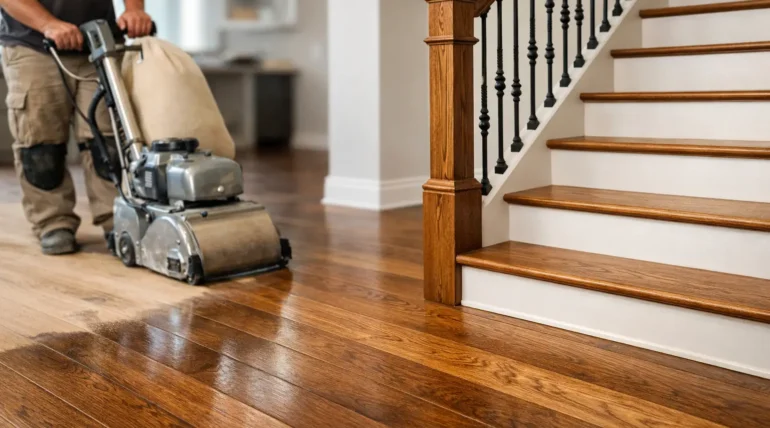
Scratches by the back door. Dull traffic lanes through the hallway. Stair treads that used to look rich and polished but now show every year of daily use. That is usually when homeowners start thinking seriously about hardwood floor and staircase refinishing – not as a cosmetic extra, but as a smart way to bring lasting beauty back to the spaces they use most.
Refinishing can completely change how a home feels. Wood that looks tired, faded, or uneven often still has plenty of life left in it. With the right sanding, stain work, and finish, existing floors and stairs can look cleaner, brighter, and more current without the cost and disruption of a full replacement. For many homes in Middle Tennessee, that makes refinishing one of the best-value upgrades available.
Why hardwood floor and staircase refinishing is worth considering
Floors and stairs take a beating. Pets, kids, shoes, furniture movement, moisture at entry points, and plain old time all leave a mark. In many cases, the issue is not structural failure. It is surface wear, finish breakdown, discoloration, and minor damage that can be corrected by a skilled refinishing team.
That distinction matters. If the hardwood is still solid and the stair structure is sound, refinishing lets you keep the character of real wood while improving appearance and extending the life of the material you already own. It is a practical investment for homeowners who care about quality that stands the test of time.
There is also the design factor. Refinishing is not only about restoring what was there before. It can also update the look of your home. A honey-toned floor from 20 years ago can be taken darker, lighter, or more neutral depending on the species of wood and the condition of the surface. Staircases can be refreshed to better match new flooring, updated paint colors, or a larger remodeling project.
When refinishing makes sense – and when it depends
Not every wood surface needs to be replaced, and not every surface is a good candidate for refinishing. The right answer depends on the age of the floor, the thickness of the wear layer, the depth of damage, and whether previous work has already removed too much material.
Refinishing usually makes sense when you are dealing with surface scratches, dull finish, sun fading, minor stains, worn high-traffic areas, or a color that no longer fits your style. Stair treads with finish wear and visible scuffing are often strong candidates too.
It depends more when boards are severely warped, heavily water-damaged, split beyond repair, or too thin for another sanding. The same goes for stair components with structural looseness, cracked treads, or major inconsistencies from old patchwork repairs. In those cases, repair and replacement may need to happen before refinishing, or instead of it.
An experienced flooring professional can tell the difference quickly. That is one of the biggest advantages of working with a full-service team that understands both restoration and installation. Sometimes the best solution is preserving what you have. Sometimes it is blending repairs with refinishing for a more complete result.
What happens during the refinishing process
Homeowners often hear the word refinishing and picture a simple coat of new finish. In reality, good results come from careful preparation and precision at every stage.
The process generally starts with evaluating the condition of the hardwood and staircase. That includes checking for loose boards, damaged treads, squeaks, old finish buildup, stain penetration, and any problem areas that should be repaired first. If floors and stairs need to match, that is addressed early, because species variation, age, and previous finish history can affect the final color.
Next comes sanding. This is where craftsmanship really shows. Proper sanding removes the worn finish, smooths surface damage, and creates a clean, even base for stain and topcoat. On staircases, this step takes extra care because of edges, corners, risers, nosing details, and transitions. Flat open floor areas are one thing. Stairs are far more intricate.
After sanding, stain may be applied if a color change is part of the project. Some homeowners want to stay close to the original tone. Others use refinishing as an opportunity to modernize the space. Either way, sample testing matters. The same stain can look different depending on the wood species and the age of the material.
The final stage is applying the protective finish. This is what gives the floor and stairs their durability, sheen, and day-to-day resistance to wear. Some homeowners prefer a more natural matte look. Others want a bit more richness and depth. The best choice depends on your style, traffic level, maintenance expectations, and how the rest of the home is used.
Floors and stairs should be planned together
One of the most common mistakes in remodeling is treating the staircase like an afterthought. A beautifully refinished hardwood floor can lose some of its impact if the stairs nearby still look worn, mismatched, or dated.
When floors and stairs are refinished together, the home feels more cohesive. The transition from one level to another looks intentional. The color flow makes sense. The details feel finished rather than pieced together over time.
There are practical reasons for planning them together too. If your staircase connects directly to the main hardwood areas, refinishing both at the same time often creates a more consistent result. It can also reduce the need for duplicate scheduling, repeated disruption, and separate color-matching decisions later.
That does not mean every project has to include both. Some homes need stair refinishing only, especially when carpet is being removed from steps or when treads have aged faster than surrounding rooms. Others may need floor refinishing in key living spaces while the staircase remains in good shape. The point is to look at the visual and functional relationship before deciding.
Choosing the right finish for daily life
Appearance matters, but performance matters just as much. The best finish is not always the glossiest one or the one that looked best in a showroom sample. It is the one that fits how you live.
Homes with children, pets, and constant foot traffic often benefit from finishes designed for durability and easier maintenance. Lower-sheen finishes can help minimize the look of dust and small scratches. Higher-sheen finishes create more reflection and drama, but they may also show wear more quickly.
Staircases deserve special attention here. They are high-contact surfaces with concentrated wear patterns. The finish needs to hold up, but it also needs to be applied with precision for safety and long-term consistency. A staircase should look beautiful, but it should also feel solid and dependable every day.
Why professional refinishing pays off
There is a noticeable difference between a refinishing job that simply changes the color and one that actually improves the home. The difference usually comes down to preparation, equipment, product knowledge, and the ability to solve problems before they become visible in the final finish.
Professional refinishing also saves homeowners from a lot of guesswork. Matching floors to stairs, handling repairs, choosing the right stain tone, and managing the timing of the project are not small details. They affect the outcome in a major way.
For homeowners who want one trusted partner instead of juggling multiple vendors, working with a local flooring company that offers consultation, product guidance, installation expertise, and refinishing services under one roof can make the process far more straightforward. That is especially valuable when the staircase ties into a broader flooring update.
R&S Flooring helps homeowners take that next step with the confidence that comes from experienced craftsmanship, dependable service, and solutions built to last.
Getting the most value from your investment
If you are considering hardwood floor and staircase refinishing, timing matters. Many homeowners wait until wear becomes impossible to ignore, but earlier refinishing can sometimes prevent deeper damage and preserve more of the wood surface. It can also be easier to coordinate before a move-in, after a remodel, or as part of a larger home refresh.
The strongest results come from looking beyond the immediate cosmetic fix. Think about how your floors connect room to room. Think about whether your stairs support the look of the rest of your home. Think about durability, not just color. A well-planned refinishing project does more than make wood look new again. It restores confidence in the spaces you use every day.
If your floors still have good bones and your staircase deserves the same level of care as the rest of your home, refinishing may be the upgrade that brings everything back into focus.